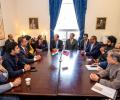
The lawmakers also hailed the strong strategic partnership between India and the US during a meeting with an all-party delegation led by Congress MP Shashi Tharoor, who briefed them on the cross-border terrorism faced by India and the country's strong and resolute stance in the fight against terror.
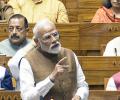
What was the aim of Operation Sindoor? Why was the operation halted so soon? asks Lieutenant General Prakash Katoch (retd).

Indian Army launched Operation Sindoor on May 7 to destroy nine terror infrastructures in Pakistan and Pakistan-Occupied-Kashmir in retaliation to the Pahalgam terror attack. All subsequent retaliations to Pakistani offensives were carried out under the moniker Operation Sindoor.
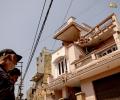
The casualties were reported hours before India and Pakistan agreed to end hostilities, which soared after the Indian Armed Forces hit terror launchpads in Pakistan and Pakistan-occupied Kashmir earlier this week in response to the Pahalgam attack.
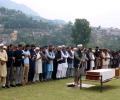
Sources have revealed that at least five hardcore terrorists affiliated with banned terror outfits Lashkar-e-Taiba (LeT) and Jaish-e-Mohammed (JeM) were killed in Indian strikes in Pakistan on May 7th. The strikes targeted nine terror sites in Pakistan and Pakistan-occupied Kashmir. Among the dead were Mudassar Khadian Khas, a LeT leader, and Hafiz Muhammed Jameel, the brother of JeM founder Maulana Masood Azhar. Other notable casualties included Mohammad Yusuf Azhar, a brother-in-law of Masood Azhar, and Khalid alias Abu Akasha, a LeT operative. The Pakistani military and government officials were present at the funerals of the slain terrorists.
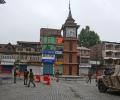
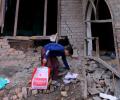
Raj Kumar Thapa, additional district development commissioner, Rajouri, and his two staff members were seriously injured when an artillery shell hit his official residence in Rajouri town, the officials said.
Amid escalating tensions between India and Pakistan, the US has said it will not get involved in the conflict, stressing that it is "fundamentally none of our business." While acknowledging concerns about a potential nuclear war, Vice President J D Vance emphasized that the US cannot control India and Pakistan, but can encourage them to de-escalate. The US has also reiterated its support for direct dialogue between the two countries and encouraged efforts to improve communications.

Jyoti was among 12 people who have been arrested from Punjab, Haryana and Uttar Pradesh over the past two weeks on charges of espionage, with investigators pointing at an alleged Pakistan-linked spy network operating in north India.
A team from India's National Investigation Agency (NIA) has reached Pahalgam in Jammu and Kashmir to assist local police in investigating a deadly terrorist attack that killed 26 people, mostly tourists, on Tuesday. The NIA team visited the site of the attack, Baisaran meadow, known for its scenic beauty. Security agencies have released sketches of three suspected Pakistani terrorists involved in the attack, identified as Asif Fauji, Suleman Shah, and Abu Talha. The Resistance Front (TRF), a shadow outfit of the Lashkar-e-Taiba terrorist group, claimed responsibility for the attack.

The government on Thursday told an all-party meeting that the Pahalgam attack was carried out to vitiate the atmosphere at a time when the economy of Jammu and Kashmir was on the upswing and tourism was booming. Briefing reporters after the meeting chaired by Defence Minister Rajnath Singh, Union minister Kiren Rijiju said all parties said they were with the government and against terror. The party leaders were briefed by Intelligence Bureau (IB) and Union Home Ministry officials on the steps being taken to prevent the recurrence of such incidents, Rijiju said. Home Minister Amit Shah, present in the meeting, interjected wherever required as officials briefed MPs, according to sources. At least 26 people, mostly tourists, were killed and scores injured when terrorists shot them in Pahalgam in Jammu and Kashmir on Tuesday.
'A terrorist has no religion -- they are nothing but the face of evil. When you offer namaz for a terrorist, attend their funeral, or give them a grave, you affirm that they belong to a religion. That must stop'
He went on to say that even though this has not been discussed, he is going to 'increase trade substantially with both of these great Nations.'
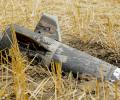
Debris resembling parts of a missile was found in a field in Hoshiarpur, Punjab, while metal parts of unidentified objects were discovered at two locations in Bathinda, sparking panic among locals. The incidents come after India successfully thwarted Pakistan's attempts to target military installations with drones and missiles across the country.
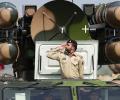
Pakistan on Tuesday increased its defence budget by 20 per cent, allocating PRs. 2,550 billion ($9 billion) for the fiscal year 2025-26, amid tensions with India.

'Trump has personally weighed in to overcome doubts and reservations about Pakistan among his top advisors.'
Pakistan's Deputy Prime Minister and Foreign Minister Ishaq Dar has warned India of a strong response, saying Pakistan will respond to a "brick with a stone" if India takes any action against Pakistan, amid heightened tensions following the April 22 terror attack in Jammu and Kashmir's Pahalgam. Dar alleged that India might have staged the Pahalgam attack to abolish the Indus Waters Treaty (IWT) and warned that any attempt by India to interfere with the treaty would be considered an act of war. He also said that Pakistan had no involvement in the Pahalgam incident and is getting support from countries like Saudi Arabia, China, the United Arab Emirates, the United Kingdom, Kuwait, Bahrain, and Hungary.
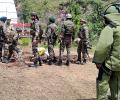
The officials said dozens of unexploded explosives were destroyed by the experts along the Line of Control in Rajouri and Poonch districts and along the International Border in Jammu and Samba which witnessed intense cross-border shelling and drone attacks from May 7 to May 10.
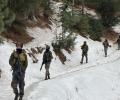
Two terrorists, including a top commander of the Pakistan-based Jaish-e-Mohammad (JeM) outfit, were killed in an ongoing operation in a snow-bound area of Jammu and Kashmir's Kishtwar district. The operation began on Wednesday following a brief encounter and continues. A separate operation to track down three other terrorists has also been underway in Udhampur district since Wednesday.
The announcement on expansion of CPEC was made following a meeting among Chinese Foreign Minister Wang Yi, his Pakistani counterpart Ishaq Dar and Afghanistan's Acting Foreign Minister Amir Khan Muttaqi in Beijing, according to a Pakistani readout.

Trump's method are more destabilising than his policy. So, a good idea these couple of years is to sip Kool-Aid, and savour the joys of Trumplomacy, asserts Shekhar Gupta.

A senior government official confirmed that after a meeting with other stakeholders, the decision has been taken and airlines and airport authorities have been informed about it.

Tensions between India and Pakistan are escalating following last week's dastardly terror attack in Pahalgam that claimed 26 lives.
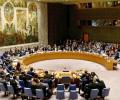
Pakistan was waiting for an opportunity to bring the Jammu and Kashmir issue to the global agenda and resorted to the terrorism route to provoke India, observes Ambassador T P Sreenivasan.
Officials have also written to the Pakistan side regarding the medicines, an official statement said.

In the aftermath of the Pahalgam terror attack, which claimed 26 lives and injured many, the government ordered all Pakistani nationals to leave the country and revoked their visas.
'If Pakistan's army wants to escalate violence in Kashmir, they have an unlimited supply of jihadis they can train and send. That's not an issue for them.'
Amid rising tensions between India and Pakistan, the US has called on both countries "not to escalate" the conflict. Secretary of State Marco Rubio is expected to speak with the foreign ministers of Pakistan and India as early as today or tomorrow. The US State Department said Washington is reaching out to both India and Pakistan "regarding the Kashmir situation" and telling them "not to escalate the situation."

The reality is that far from being friendless, India is better positioned in the world than at any point post-Cold War, asserts Shekhar Gupta.
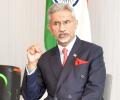
When asked whether both armies talked to each other, initiated by the Pakistani army, Jaishankar said, "Yes, we have a mechanism to talk to each other as a hotline. So, on the 10th of May, it was the Pakistani army which sent a message that they were ready to stop firing, and we responded accordingly."
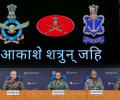
The Indian Air Force on Monday said all its military bases and systems continue to remain fully operational, and ready to undertake any further missions if the need arises.

Days before the deadly terror attack in Pahalgam, intelligence agencies had flagged the potential targeting of tourists especially those staying in hotels on the outskirts of Srinagar in the foothills of the Zabarwan range, officials in the know said Saturday.

In controversial remarks, Maharashtra Congress leader Vijay Wadettiwar on Monday said terrorists have no caste or religion and questioned veracity of the claim that terrorists asked about faith of tourists before killing them in Kashmir's Pahalgam town last week.
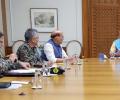
India has called Pakistan's nuclear bluff with Operation Sindoor and sent a psychological message to state-sponsored terrorists: nobody is untouchable and no place in Pakistan is safe for you, government sources said on Sunday.
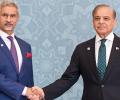
Addressing a special 'Youm-e-Tashakur' event at the Pakistan Monument in Islamabad, Shehbaz said that India and Pakistan fought three wars and got nothing.

"China is an absolutely impossible factor to ignore in what has been our confrontation with Pakistan," Tharoor said.

Sharada Kukreja, a Pakistani woman living in Odisha for 35 years after marrying an Indian citizen, has been served a notice to leave the country. She has appealed to Prime Minister Narendra Modi and Odisha CM Mohan Charan Majhi to stop her deportation, citing her long-standing ties to India and family here. Sharada fled Pakistan to escape forced conversion and marriage, and despite having an Aadhaar card and participating in elections, she has not been granted Indian citizenship. The Odisha government has identified 12 Pakistani nationals residing in the state and asked them to leave by April 27. Another Pakistani woman in Bhubaneswar also received a country exit permit on Saturday.

From the Sensex firms, Eternal, Mahindra & Mahindra, Maruti, Bajaj Finance, Tata Steel, Bharti Airtel, Bajaj Finserv, Asian Paints, Power Grid and State Bank of India were among the laggards. Kotak Mahindra Bank, Axis Bank, Titan, HCL Tech, Tata Motors, Infosys and Tata Consultancy Services were the gainers.

The US intelligence assessment highlights Pakistan's near-certain procurement of weapons of mass destruction-applicable goods from foreign suppliers, primarily through Chinese support.
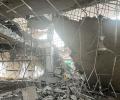
'India won't take anything from Pakistan lying down.'

In the letter issued, considering the last night attacks by Pakistani forces in Jammu and Jaisalmer regions, the provision also authorises the use of local authority funds for such emergency measures, giving them precedence over other financial obligations.
